7 Best Abandoned Cart Email Strategies to Drive E-commerce Revenue
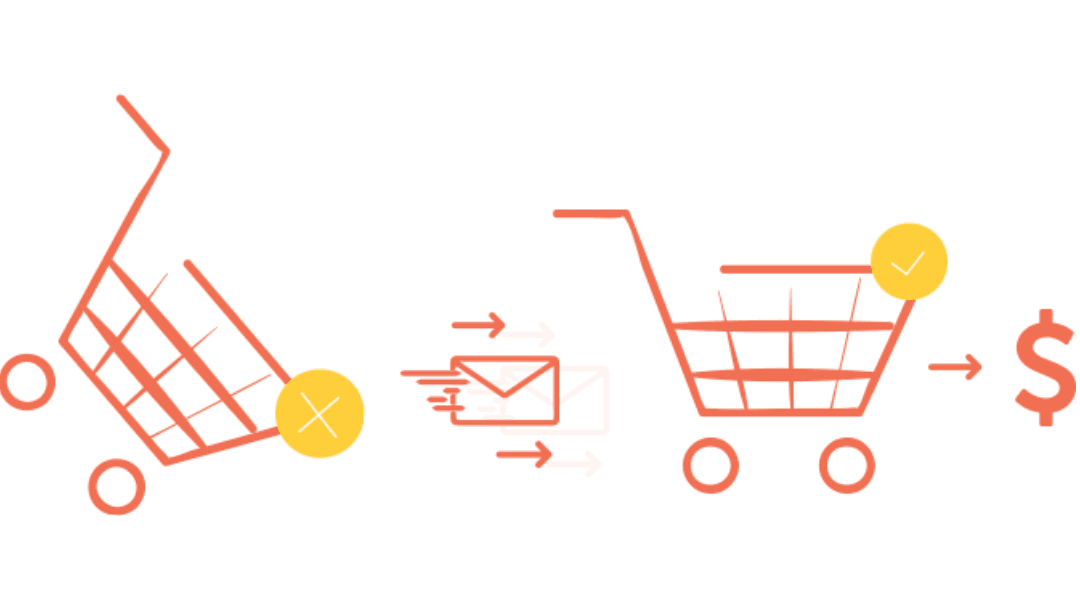
Cart abandonment emails are automated emails triggered when a visitor moves products to the shopping cart but leaves without completing the checkout. The automated emails entice those visitors to revisit your eCommerce site and make the purchase.
The latest findings reveal that of shopping carts have abandoned products in them. In fact, 70 out of 100 visitors don’t complete the purchase. That’s an incredible loss of revenue for any eCommerce business. Fortunately, abandoned cart recovery emails can help recover some of that lost revenue.
This detailed guide introduces you to seven abandoned cart email strategies to win back customers and improve your profit margin.
Here's the first one:
1. Create a Gripping Subject Line
The success of your abandoned cart recovery email hinges on the subject line. No matter how great the content inside the email is, people won’t open it unless the subject line is compelling enough.
While creating a subject line, focus on these elements:
• Brevity: If the subject line is too long, you’ll likely fail to grab the recipient’s attention. Exercise brevity and keep the subject line within seven words.
• Clarity: Avoid the use of fancy, flowery language, and do not beat around the bush. Your subject line should be straightforward and clear.
• Urgency: While ensuring brevity and clarity, create a sense of urgency using tactics like FOMO and product scarcity.
• Personalization: Try and include the user’s name in the subject line.
By incorporating these elements, you’ll greatly amplify the chance of your abandoned cart emails getting opened. You may leverage tools like and to craft compelling subject lines.
2. Include the Abandoned Item
Generic abandoned cart emails rarely get clicked through. One of the best abandoned cart recovery practices you must follow is featuring the abandoned item itself!
It’s quite possible that the visitor had moved multiple products to the cart but didn’t complete the purchase. They might not even remember the abandoned products after a certain while, especially if they intended to go on a shopping spree!
By featuring each item in the email, you can entice the prospective customer to complete the checkout process. However, ensure that the images used are of high quality.
One of the reasons people leave their shopping carts is that they simply change their minds about the product. Perhaps, it wasn’t exactly what they wanted. Therefore, below the abandoned product, it’s always wise to include a ‘You May Like’ section in the email where you can recommend similar products of interest.
Undoubtedly, personalization can greatly reduce your cart abandonment rate.
3. Use Social Proof
Visitors might feel apprehensive about shopping online despite their needs or interest, especially if they haven’t purchased from your eCommerce store before.
Unlike brick-and-mortar stores, they can’t physically feel the product in order to make a firm decision. This is where social proof can be a game-changer.
You can reduce or eliminate that distrust by including existing customer testimonials on the abandoned products. Using social proof in abandoned cart emails is also beneficial if the user is unsure about buying an expensive product. The testimonials would tell the email recipient about the quality and benefits of the product.
Source the best reviews from social media, Google, and third-party sites like Trustpilot and use them in your abandoned cart email strategy.
4. Optimize for Mobile
According to the , about one-third of internet users in the United States shopped online every week in 2021 through their mobile devices. They also tend to check emails on the go instead of accessing them via desktops only. It’s supported by as 85% of people read emails on their smartphones.
Think about the sales you’re missing out on by not optimizing your cart abandonment emails. If people have to zoom in to read the copy or view an image, they would prefer to exit the email no matter how catchy the subject line is. Hence, mobile optimization is the need of the hour for all email campaigns in general.
Here’s how you can offer a top-notch mobile experience:
• Concise copy: Use bullets, short sentences, brief headlines, and bite-sized copy to improve readability on mobile devices.
• Smaller images: If the images used in shopping cart abandonment emails are too big, they won’t load as fast as they should. Instead of waiting for them to open, the customer would rather switch to zillions of other apps on their phone.
• Button CTA: Rather than hyperlinking the text (which might look tacky on mobile), use floating buttons to include CTAs in emails.
5. Craft an Email Series
Infuse a little persuasion in your abandoned cart email strategy. A single email might not be enough to convert users. Create a series consisting of three cart abandonment emails to achieve a higher success rate.
By maintaining consistent contact with prospective customers without being overbearing, you can reduce the cart abandonment rate.
Of course, you can’t be bombarding people with back-to-back emails as soon as they leave the shopping cart. You have to be calculative and strategic about all three emails. Let’s understand how.
The First Email
The first abandoned cart email in the series should gently remind users to continue their purchases. It should be sent after at least an hour of the visitor exiting your eCommerce site. People might exit your website for various other reasons.
They could be at work, have a meeting, face family obligations, etc. But they may still intend to return to your site after addressing the obligation. Sending the first email after mere seconds might actually be annoying. The shopper may even consider it spam.
Only gently nudge them after an hour has passed.
The Second Email
This email is not very different from the first email in its purpose, i.e., reminding the shopper about abandoned products. However, it is sent only after 24 hours have passed. The second email also serves another purpose in that if the recipient misses the first email, they will likely open the second.
The content, however, should be different from the first email. Although both emails have a similar goal, they must not be copies of each other.
The Third Email
If possible, create a third email in your abandoned cart recovery strategy. This email is usually sent after 72 hours and is intended to incite urgency. Use words such as ‘expire’ in the subject line. It could be “the offer will expire in two hours” to encourage last-minute purchases.
That said, it’s not recommended to go overboard with this strategy. It might make your brand seem a little desperate, and the user may end up unsubscribing from your email list. In general, it’s best practice to tweak your strategy depending on what’s working out for you.
6. Leverage Loyalty and Rewards Programs
One of the most popular abandoned cart email strategies is incentivizing shoppers using discount coupons. However, excessive reliance on the discount tactic will deplete your profit pool. Because it’s such a prevalent technique, many customers expect to receive a discount after leaving your site without buying the product.
The third drawback of overusing discounts is that they devalue your product. Often, people who exit the site without making a purchase are your loyal customers. Most likely, they intend to return. Hence, you don’t need to slash your profits by introducing discounts (too often) to your loyal customers.
Whatcanyou use instead of discounts?
The answer is a loyalty and rewards program. According to , this strategy increases the revenue recovered through each abandoned cart email by 39% to 600%. Let’s give you an example.
If a loyal shopper has 300 reward points, they are eligible to get 10% off the product they abandoned. At 1000 points, they might get 20% off, and so on. This strategy works incredibly well for existing, loyal customers. For new visitors, you can offer a discount based on their average order value (AOV).
If the AOV is significant, say $200 and more, the new visitors can be incentivized too.
7. Use Clean Email Layouts
The significance of using a clean layout cannot be stressed enough. Abandoned cart emails that look cluttered and unappealing will likely turn the shopper away even if the copy is excellent.
Creating a clean layout requires CSS and HTML knowledge. However, you can also import templates from an .
One of the best abandoned cart email examples is ASOS' emails. They incorporate most strategies discussed in this article.
Their emails
• Feature the abandoned item
• Use floating buttons
• Include a brief and compelling headline
• Have concise copy
• Use a clean layout
• Offer personalized product recommendations
That concludes our list of abandoned cart email strategies!
Looking for a way to personalize your entire eCommerce website? Try , a leading commerce experience platform to offer a real-time personalization experience.
Final Thoughts
Not having an effective abandoned cart email strategy in place spells a loss of revenue. Automated emails do require hard work to set up. They necessitate great design, inspiring copy, mobile optimization, etc., to produce results. However, once set up, they generate incremental revenue for your eCommerce business.
Use the abovementioned strategies in your abandoned cart recovery campaigns and measure the results. Remember that customer expectations might change over time.
Hence, reviewing and updating your strategy from time to time is crucial. Leverage A/B testing tools to implement new ideas, measure them, and then roll them out for a larger audience.
Download Our Free E-Book And Get Started Today!
Subtext supporting the title. Lorem ipsum dolor sit amet consectetur. Turpis ullamcorper volutpat augue.
